
Study 4 – Yashika Coin Facade
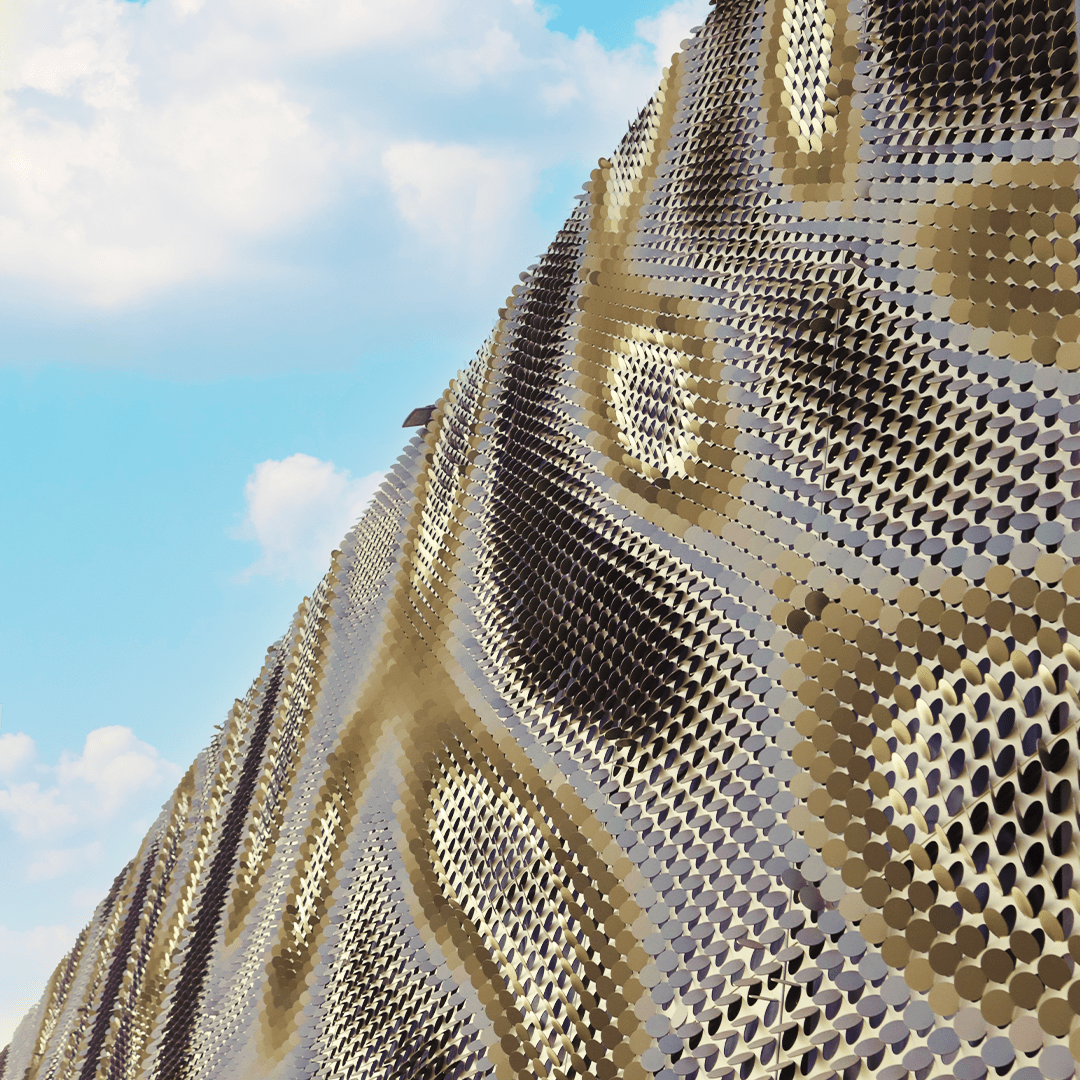
Facade by SOGA Studio

Script and methodology:

Parameter Setup: Using number sliders, the following are defined.
- X,Y Coin Amounts
- Coin Diameter
I. Model of Surface
To allow for iterations of the final perforated panel, the surface geometry used to draw attractor curves was modeled through grasshopper.
Longitudinal Point Distribution: A vertical line is drawn along one side of the panel boundary, from which a variable number of longitudinal curves can be drawn. These are then split into points to be randomly displaced within a range.
Undulating Surface: The displaced points provide a basis for a set of undulating polylines that will define a lofted surface.
Sheared Folds: Since the original facade had diagonal folds, the undulating surface is then sheared and transformed into a wire mesh. The curvature of these lines define the attractor curves for the coin perforations below.
II. Coin Perforations
Coin Array: After analyzing the proportions of the facade, an array of circles is created.
Directionality of Perforation: Since the depth effect of the facade is achieved by the orientation of the coin, the weight parameters of the attraction curves can be reflected as a point along the circle circumference. This point and its tangent provide a rotation axis for the coin opening.
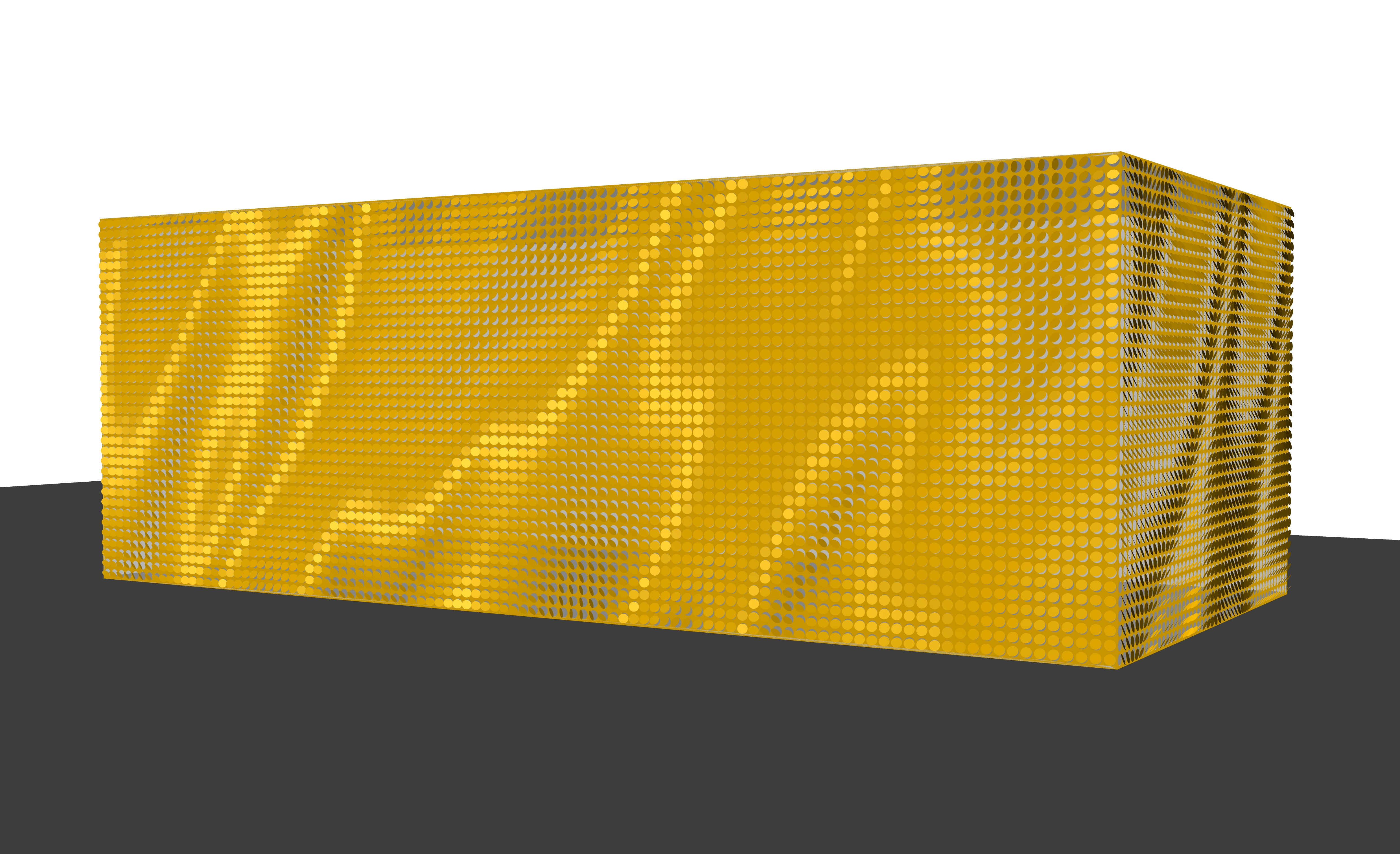
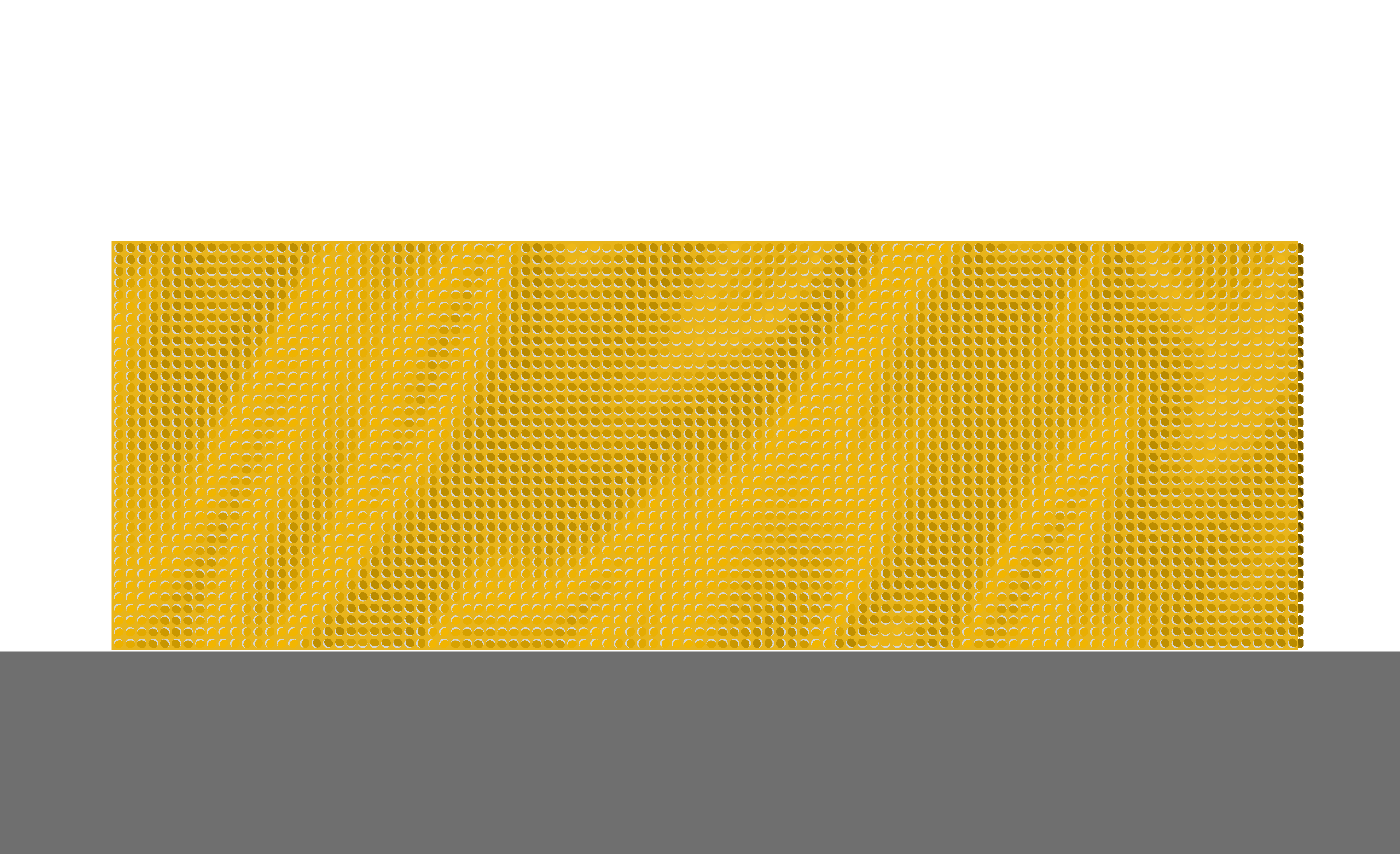
Results:
 Sofía Leal Cavazos