
Panel Generation of Organic Canopy Form:
Architecture by Sam Sterling Architecture

Project Scope:
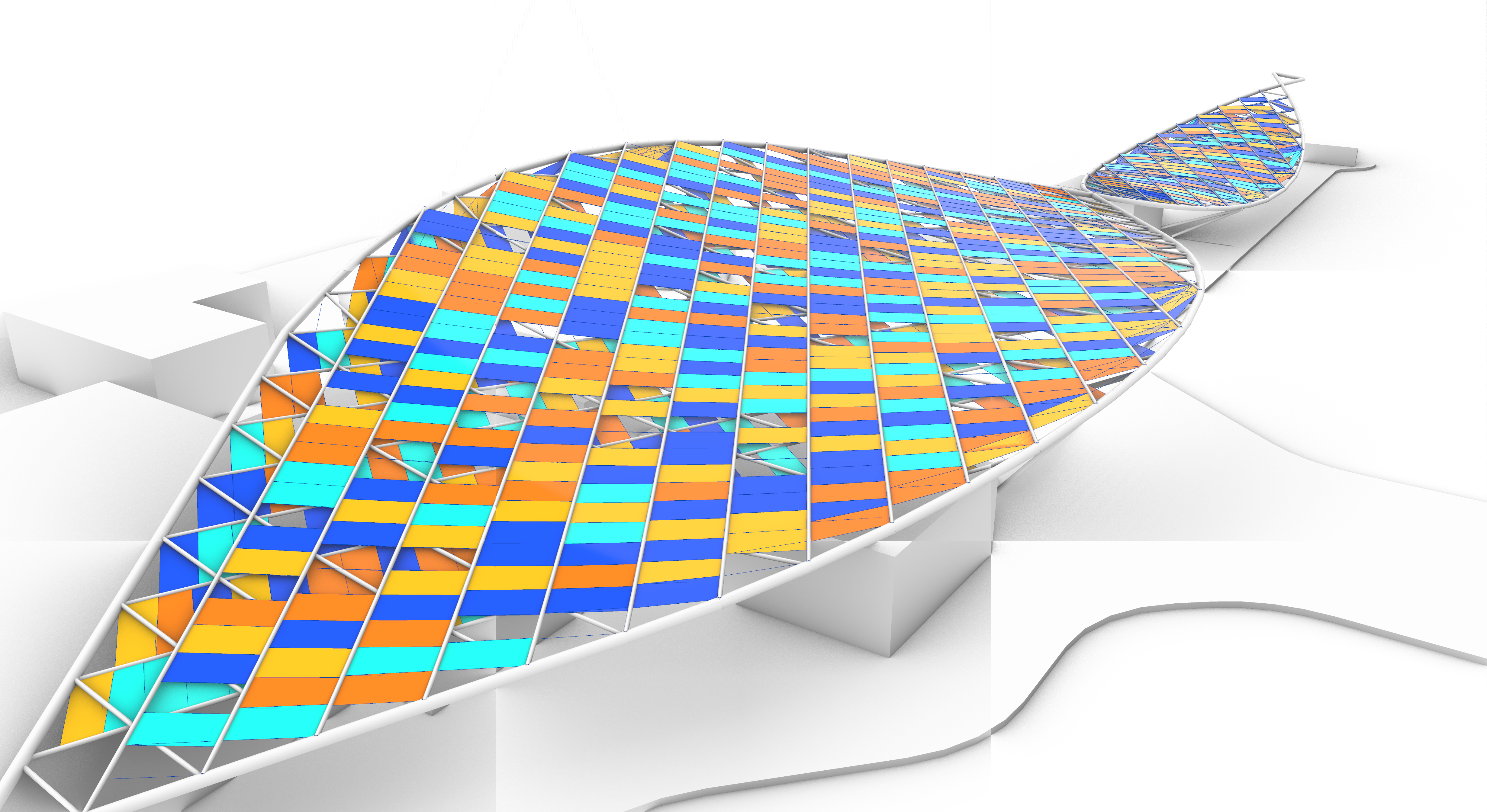
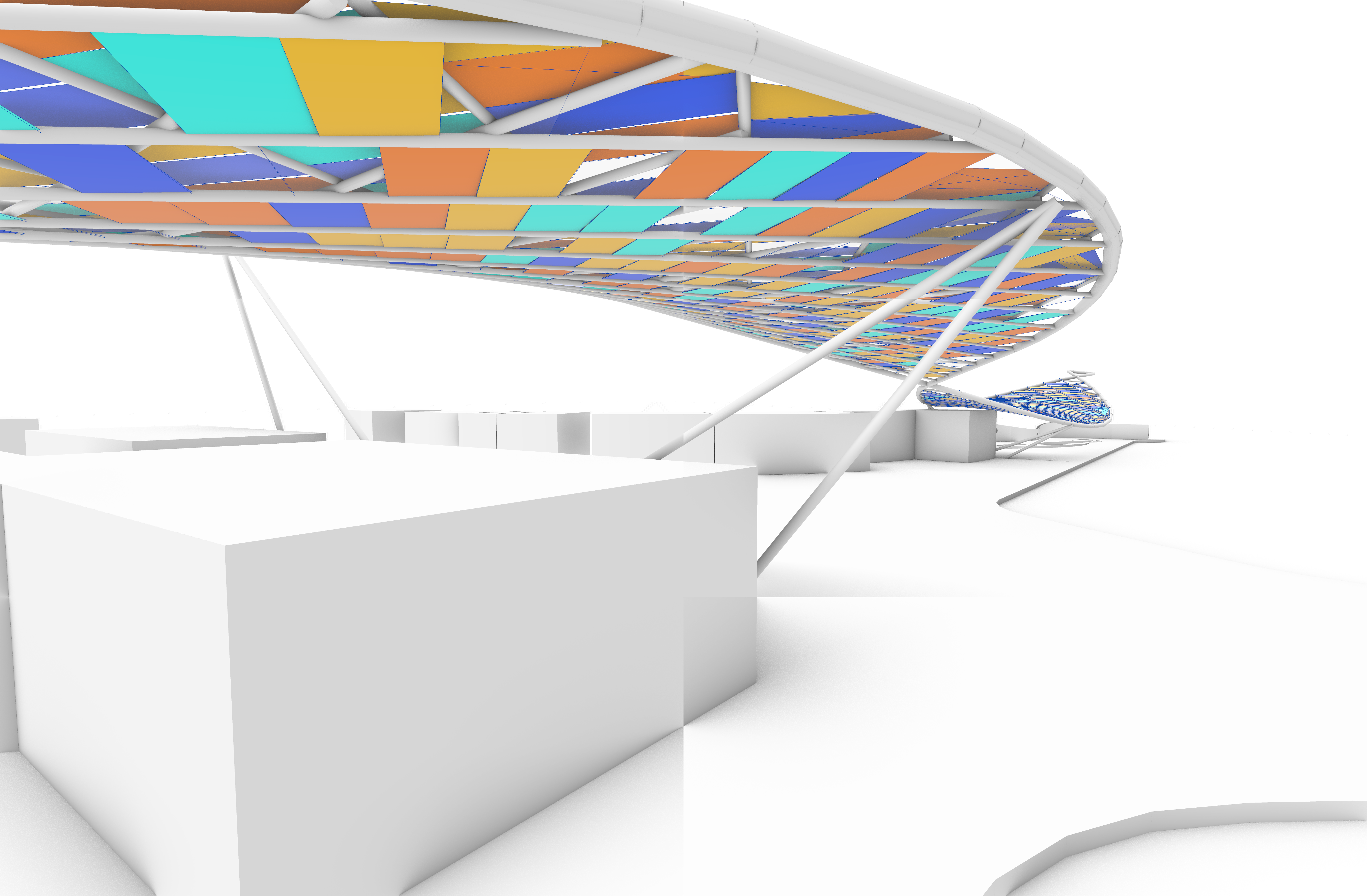
This project involves developing a parametric design script to optimize the placement and distribution of panels across a layered canopy structure, designed by Sam Sterling Architecture. The canopy features both topmost and bottommost structural layers, with panels arranged in varying directions to create an overlapping visual effect.
Key requirements include:
- Panel Placement and Orientation: Panels will be placed on both the upper and lower structural layers, with overlap between them to achieve a dynamic, layered appearance. The parametric script will need to manage this overlap while maintaining the design intent of random orientations.
- Panel Distribution: Distribution will vary based on the architectural zone:
- The west portion (over the existing building) requires less solid panels, due to the existing building below.
- The center of the canopy needs a denser arrangement of solid and perforated panels.
- Other regions will allow for randomization in panel type placement.
- Panel Overlap: There will be cases where perforated panels are layered atop glass, so the script should account for both visual and physical overlap between these materials.
- Panel Typology: The panel units will all be rectangular to accommodate a standard module size, including the PV panels. The script will ensure this rectangular format is maintained, regardless of the underlying triangular structural grid.
In summary, the parametric design script will need to balance geometric constraints, material variety, and region-specific design directives to create a coherent, optimized canopy structure.
Grasshopper Script:
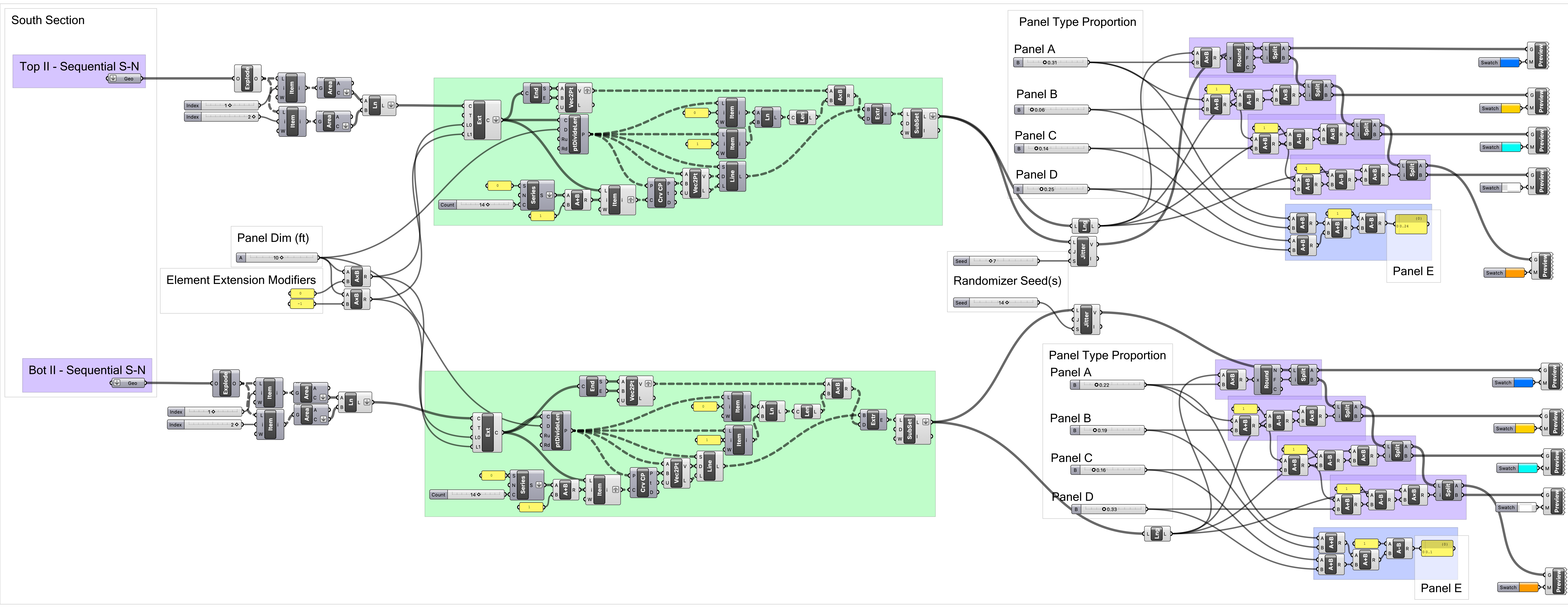
Parameter Setup: Using number sliders, the following are defined.
- Top/Bottom Elements – Selected sequentially from Rhino model
- Panel Dimensions
- Panel Type Proportion
- Randomizer Seeds
Panel Geometry: The modeled elements are first simplified into nodes and lines, which are divided at a user-defined distance. At each split, the closest point on the subsequent line can be found, providing a perpendicular reference to both lines. This reference is then extruded to the previously defined distance. Special attention is paid to the listing and grafting sequence of points to ensure the extrusions happen with respect to individual elements.
Panel Distribution: The modeled extrusions are then randomly listed and split per the user-defined proportions, each with a unique color swatch.
Results:

 Sofía Leal Cavazos